
Members Message March 2026
Members Message
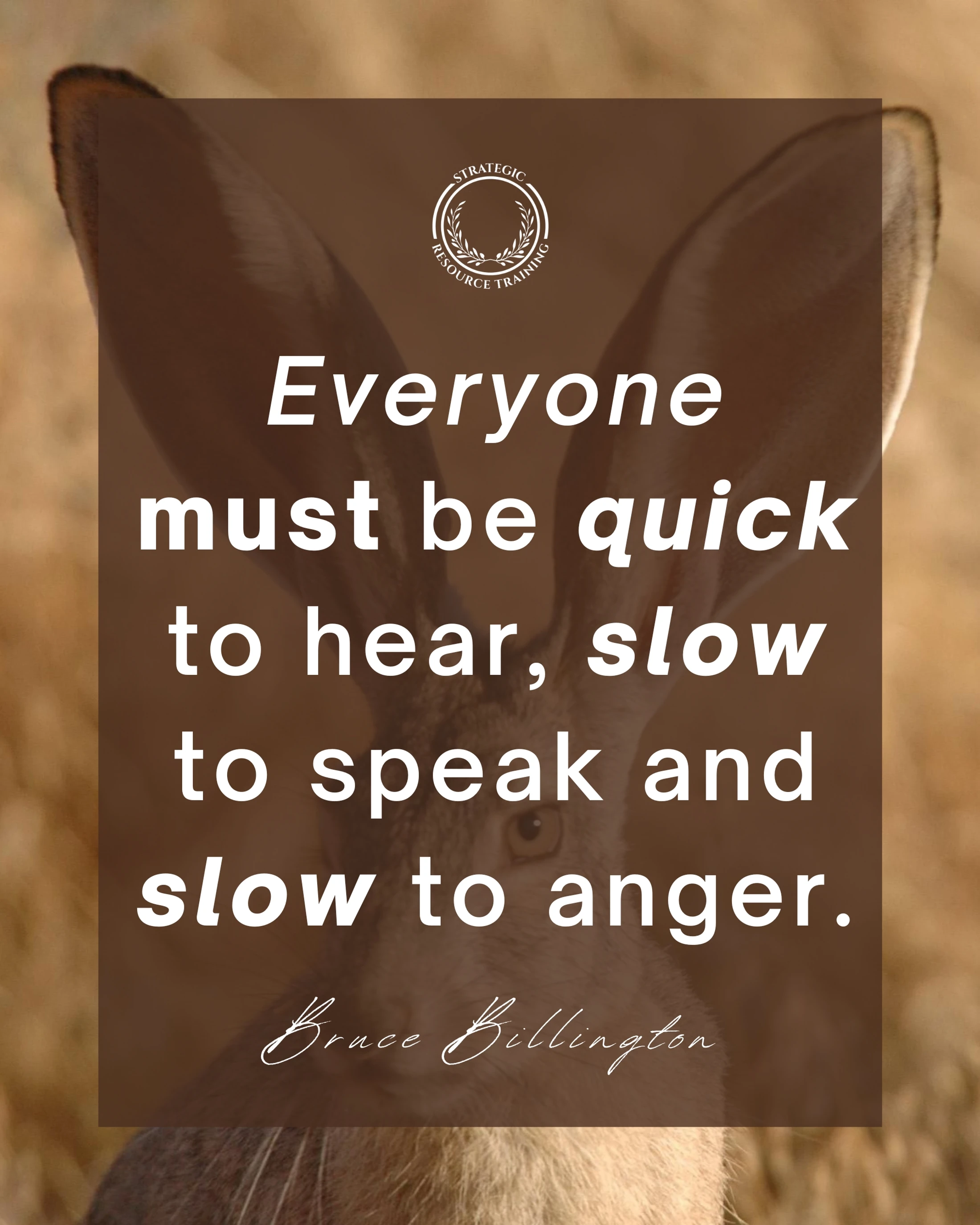
As practical and wise as this sounds, it is challenging because it cuts across our fallen human nature. James calls us to place a restraint on some key areas of passion that often surface quickly and can get us into a lot of trouble.
Many leaders are poor listeners – they don’t value what others have to say and tend to tune out.
James encourages us to listen carefully, think before speaking, and control our anger. As followers of Jesus, we are reminded that, although these things are difficult for people, with God, all things are possible. We are both called and empowered to live this way.
Before we rush into any situation with our own opinions, defenses, or anger, we are to pause and consider what the Word of God says about it.
“God is going to strike you, you whitewashed wall! Do you sit to try me according to the Law, and in violation of the Law order me to be struck?” But the bystanders said, “Do you revile God’s high priest?” And Paul said, “I was not aware, brethren, that he was high priest; for it is written, ‘You shall not speak evil of a ruler of your people.’” (Acts 23:3-5).
Paul is referring to the fact that the Jews were not allowed to abuse prisoners, especially not before they had been properly tried and found guilty. But then Paul is told that the man he is abusing is the High Priest, something Paul sincerely did not know.
In response, he pulls himself into line with God’s Word by quoting Exodus 22:28, which says, “You shall not curse God, nor curse a ruler of your people.”
Even though Paul had been wrongfully abused, he did not use that as an excuse. He reins in his anger, corrects himself, and brings his behaviour back into line with God’s Word – what an incredible testimony.
We need to train ourselves to recognise where Jesus is working, rather than trying to get our own way. This is crucial in all relationships, especially in marriage. The answer comes when we are willing to step out of the right/wrong game and ask, “What is Jesus saying here?”
James is endeavouring to correct a variety of disorders among Christians and is urging us to become good listeners and, before we speak, to address any anger that would disrupt peaceful discussions.
We are either for Him or against Him - there is no neutral ground here. Most of what we say in anger we will regret later, because we haven’t centred our hearts and minds on the Kingdom of God first.
There is a place for anger, but it must be righteous anger, which means getting our fallen nature - our defenses, pet theories and hates, grievances and past hurts, and the desire to “get even” - out of the way. This takes a lot of work, even when we employ the Holy Spirit.
In Verse 20, James says that the anger of man does not achieve the righteousness of God. This means the only anger that will work for us is when we sense that God is angry about something and embrace it on His behalf. God works more effectively with most of us when we are in a place of humility and calm than when we are angry.
And in the naked light I saw
Ten thousand people, maybe more
People talking without speaking
People hearing without listening
People writing songs that voices never share
No one dare
Disturb the sound of silence
- People talking without speaking - people are talking all the time but saying nothing. If we are going to reach others, we must be able to talk in a manner that is interesting, well-informed, and reflects interest in both the subject and the person we are speaking to.
- People hearing without listening - we are waiting for our turn to talk and not listening to what others are saying.
The song highlights how modern society has taken us in a direction where no one really pays attention to the content of what they hear or say.
We are so missing the Holy Spirit. His voice is being drowned out by all this other, mostly meaningless, chatter, especially from cellphones.
This encourages the selfish view that we only have one life to live, so we will always do what we believe is best for ourselves, and that's that.
As Christians, we can't afford to be like this. We are here to reflect something very different. When we communicate, we must understand what we believe, how to access its power, and how to respond to those who don’t share it.
More and more worldly sayings, profane language and coarse comments are invading the Christian world. We should not be using the devil’s language.
James tells us that no one can tame the tongue; it is a restless evil and full of deadly poison (James 3:8).
What does our speech reflect? Is it positive or negative?
To change it – or to speak in a godly manner – we must return to the source of His power. Through Him and Him alone, we can act valiantly – even with our speech. Only in Christ can our tongue be tamed – and we are called to learn how to do this. It is a daily choice. We will either curb our fallen nature and embrace the life of Christ or miss the chance to live life to its fullest.
In all these things, we need to stand with Joshua in saying, “Choose for yourselves today whom you will serve: but as for me and my house, we will serve the Lord.” Joshua 24:15
God bless,
Bruce Billington
__largepreview__.webp)